
HOW WELL DOES YOUR SCHOOL APPROACH WELLBEING?
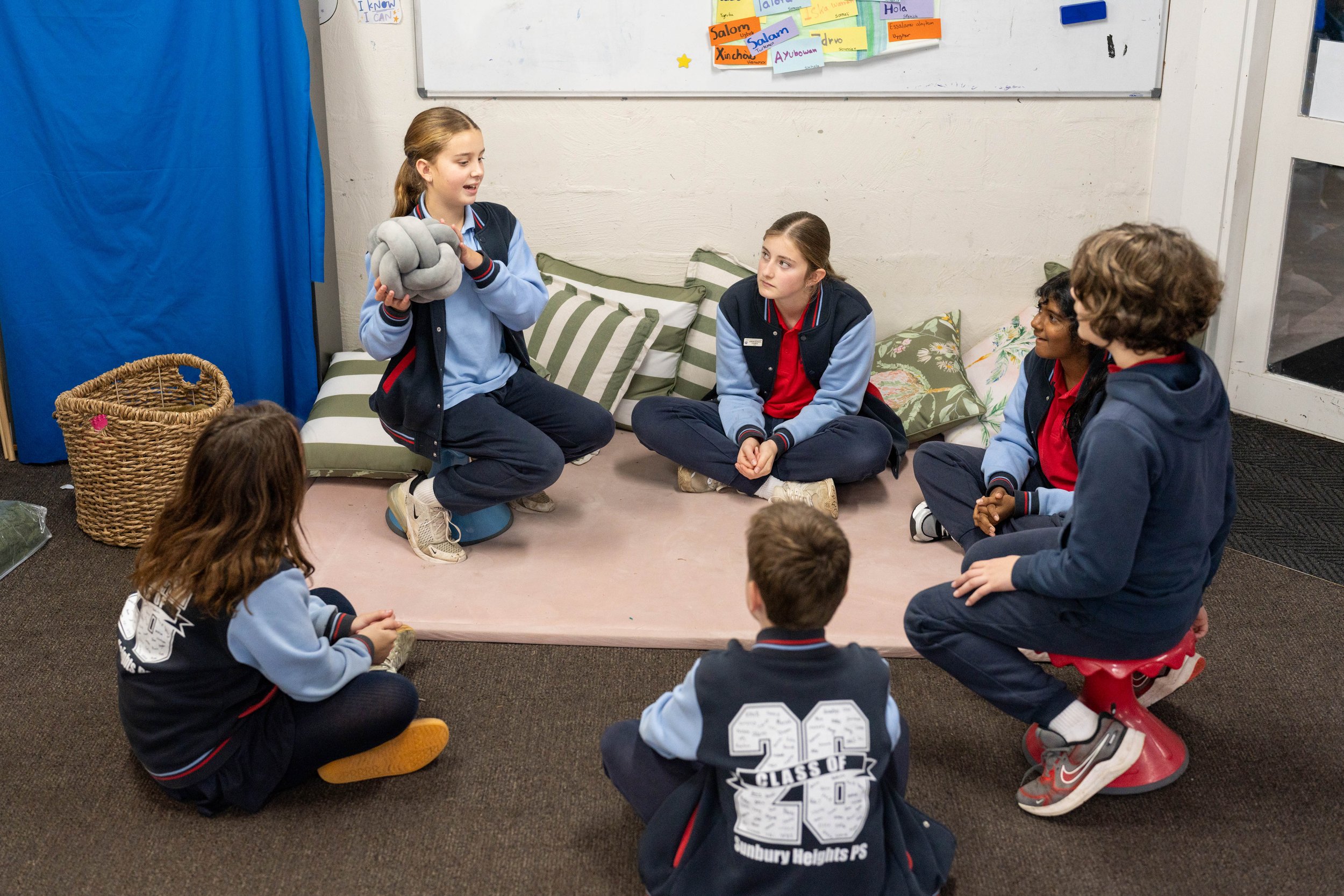
Use our Scorecard tool below to find out how well your school does in wellbeing.
At Psychs in Schools, we offer mental health services for students
onsite at school. Find out more about the Wellbeing Scorecard.
School Wellbeing Systems Scorecard
The Psychs in Schools Wellbeing Systems Scorecard is a structured self-assessment tool to help school leaders evaluate the strength, coherence and sustainability
of their student mental health systems.
The intent is not to audit individual programs but to assess the architecture that sits underneath them.
The Scorecard reflects the system-level reform principles articulated in the Royal Commission into Victoria’s Mental Health System, alongside international school wellbeing frameworks. These include the World Health Organisation Health Promoting Schools model and System Level Wellbeing research from The Organisation for Economic Co-operation and Development (OECD).
Across these sources, high-performing schools share common characteristics:
• Formal governance oversight of wellbeing
• A documented and coherent whole school framework
• Structured tiered models of support
• Early identification pathways
• Workforce capability uplift
• Integrated partnerships with external services
• Continuous improvement cycles informed by data.
Policy Context
The Royal Commission identified schools as a critical setting for prevention, early intervention and integrated service delivery. It recommended:
• Strengthening workforce capability in schools
• Embedding tiered models of mental health support
• Improving early identification of emerging needs
• Enhancing collaboration between the education and health sectors
• Establishing accountability and continuous improvement mechanisms.
The Victorian reforms that followed were designed to build system capacity within schools, not simply fund additional programs. This Scorecard operationalises those reform principles at the school level.
Strategic Rationale
Many schools invest significantly in wellbeing initiatives, but fall short on:
• Coherent alignment across tiers
• Clear referral pathways
• Defined governance oversight
• Measurable review cycles.
The Scorecard addresses this gap by shifting the focus from “what programs are we running?” to “how robust is our system?” Research consistently shows that sustainable improvements in student mental health outcomes are associated with system coherence, rather than isolated interventions.
Intended Outcomes
The Scorecard is designed to:
Provide school leaders with a rapid, structured snapshot of system maturity
Identify strengths and structural gaps
Support strategic planning conversations
Align wellbeing planning with state-level reform directions
Promote early intervention capacity rather than crisis reliance.
Disclaimer: The tool is developmental in nature. It is not a compliance instrument. Its purpose is to support reflection, prioritisation and informed decision making.
Alignment with Psychs in Schools
The Scorecard highlights domains where structured psychological input strengthens school systems, particularly:
• Tiered support architecture
• Early identification processes
• Workforce capability development
• Data-informed intervention cycles
• Integrated external partnerships.
Conclusion
The Psychs in Schools Wellbeing Systems Scorecard is grounded in contemporary reform architecture and international best practice. It provides a concise, credible and policy-aligned mechanism for schools to assess the strength of their mental health systems.
Its value lies not in complexity, but in clarity.
It translates high-level reform principles into practical, measurable domains that school leaders can act upon.
References
Royal Commission into Victoria’s Mental Health System. (2021). Final Report: Transforming Victoria’s Mental Health System. Victorian Government.
World Health Organisation. (1997, updated guidance 2021). Health Promoting Schools: An Effective Approach to Early Action on Mental Health in Schools.
OECD. (2015). Skills for Social Progress: The Power of Social and Emotional Skills. OECD Publishing.
OECD. (2019). Future of Education and Skills 2030 Framework.
CASEL. (2020). CASEL Guide to Schoolwide Social and Emotional Learning.
Victorian Department of Education. (2022). Mental Health Reform in Schools: Implementation Guidance.