
Course Correcting Growth: The Power of Feedback-Informed Treatment in Schools
By the end of this article, you will be able to:
Understand the core mechanics of Feedback-Informed Treatment (FIT) and how ultra-brief, session-by-session data replaces clinical guesswork with evidence-based precision.
Master the real-time "Course Correction Technique" to continuously calibrate therapy before a student disengages or drops out.
Recognise how inserting embedded, FIT-trained provisional psychologists onto your wellbeing team builds an accountable, outcome-driven therapeutic culture across the school.
In education, we would never wait until the final exam of the year to check if a student understands the material. We use continuous, low-stakes formative assessment to gauge progress, adjust our teaching strategies, and catch struggling learners long before they fail.
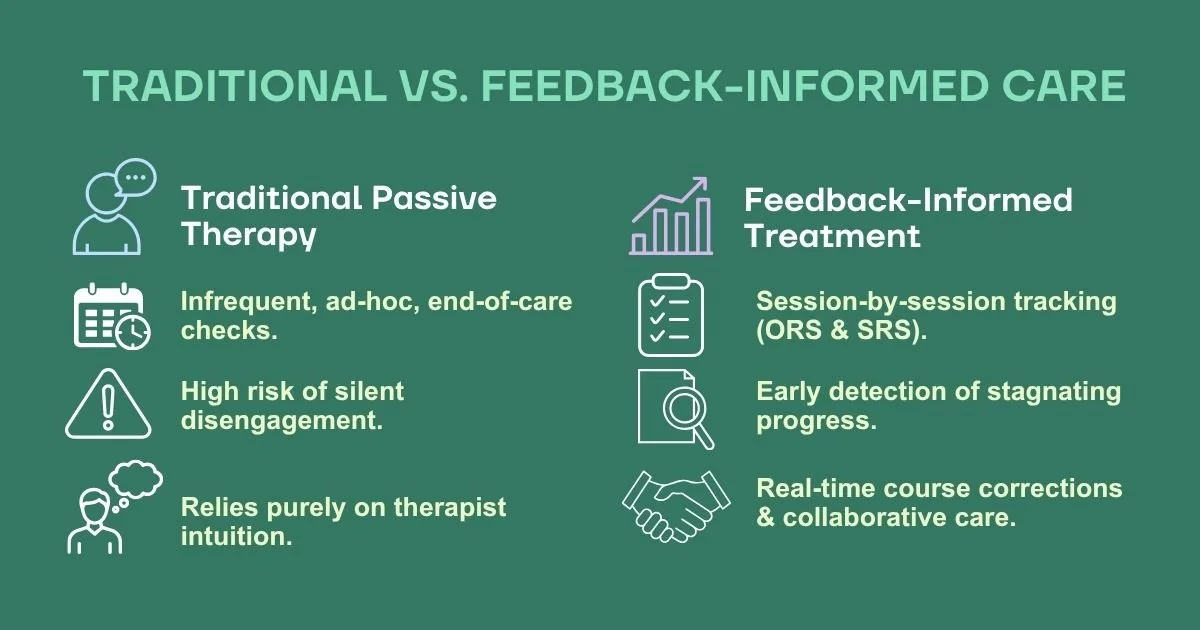
Yet, historically, mental health support in schools has operated on a very different, far more passive model. A student is referred to counseling, attends weekly sessions, and the school community simply hopes that progress is being made.
To optimise therapeutic growth and protect student wellbeing, our approach to psychology must evolve from passive hope to active, real-time measurement. This is where Feedback-Informed Treatment (FIT) transforms school-based care - using simple, session-by-session feedback as a continuous course-correction engine for therapy.
What is Feedback-Informed Treatment (FIT)?
Validated by decades of clinical research, Feedback-Informed Treatment is an evidence-based practice in clinical psychology counselling. Rather than relying solely on the psychologist's subjective intuition, FIT systematically measures two core variables at every single session using ultra-brief, scannable scales:
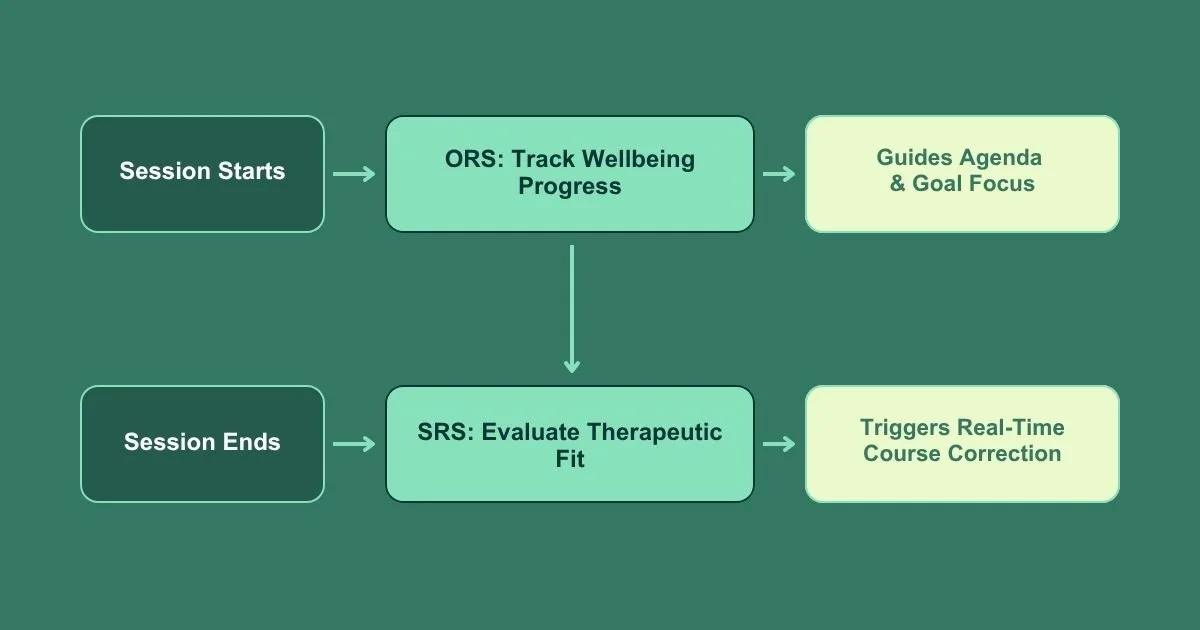
The Outcome Rating Scale (ORS): Administered at the beginning of the session, the ORS tracks the student’s self-reported wellbeing across four key domains: personal/emotional health, family relationships, social functioning, and overall life satisfaction.
The Session Rating Scale (SRS): Administered at the end of the session, the SRS measures the strength of the therapeutic alliance - checking whether the student felt heard, agreed with the session goals, and felt the clinician's approach fit their needs.
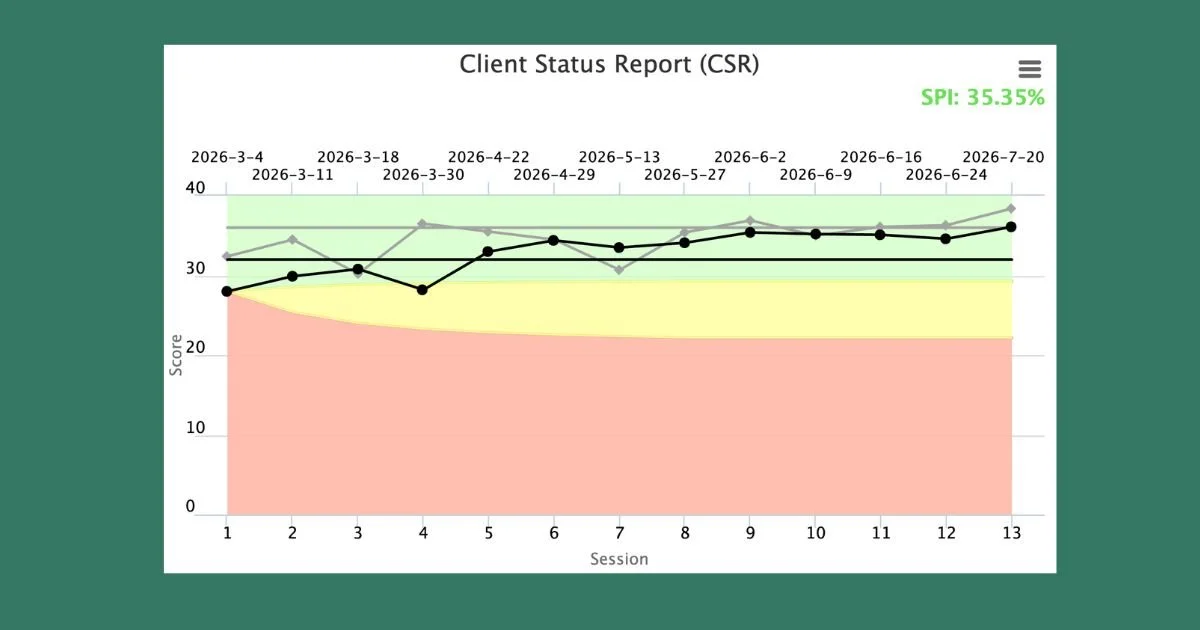
Together, these two visual scales take less than sixty seconds to complete, yet they generate a clear visual trajectory of the student's progress and alliance health over time.
The Course Correction Technique: Turning Data into Growth
The true power of FIT is not the data itself; it is the deliberate course correction that the data enables.
In traditional therapy, when a student is not improving - or when an underlying rupture in trust occurs - they rarely confront the therapist directly. Instead, they quietly withdraw, disengage during sessions, or ask to drop out of counselling.
By embedding the Session Rating Scale into the final minutes of every meeting, the clinician creates an explicit, blame-free environment for feedback. If a student marks a lower score on "Approach or Method," the psychologist does not become defensive; they immediately trigger a Course Correction Intercept:
The Acknowledgment: "I notice your score on our approach/session today was a bit lower than usual. Thank you for showing me that. It tells me that the way we worked today didn't quite hit the mark for you."
The Clinical Pivot: "Next week, would you prefer if we spent less time talking through options and more time using visual mapping, or should we change the goals we're prioritising?".
This immediate pivot repairs alliance ruptures before they cause therapeutic failure, restores student agency, and ensures that treatment continuously adapts to the child's evolving needs.
The Operational Benefit: Elevating Your School’s Wellbeing Team
When you insert embedded, FIT-trained psychologists directly into your school's multidisciplinary wellbeing team, the entire culture of care elevates:
1. Drastically Reduced Student Dropout Rates
Research consistently demonstrates that monitoring the therapeutic alliance is the single greatest predictor of positive clinical outcomes. By catching friction points early, embedded psychologists ensure students stay engaged, supported, and connected.
2. Objective Evidence of Impact for School Leadership
School leaders no longer have to wonder if their investment in wellbeing support is working. FIT generates aggregated, anonymised progress curves that prove the functional efficacy of psychological care across the student population - providing clear data for executive boards and welfare teams.
3. Seamless Integration with Tiered Interventions
When session tracking reveals that a student's progress on the ORS has stagnated despite consistent therapeutic adjustments, the psychologist can promptly consult with the broader school team along with their supervising team. This triggers timely multi-tiered support - such as updating classroom learning plans or involving specialised external services - without wasting precious months in ineffective care.
Optimising the Human Journey
Therapy is not a linear, one-size-fits-all pathway. It is a dynamic human journey that requires constant calibration, active listening, and mutual respect.
By embedding Feedback-Informed Treatment into Psychs in Schools’ psychological services, we ensure that every student's voice remains the guiding force of their own care. We give our educators peace of mind knowing that onsite mental health support is transparent, accountable, and outcome-driven - constructing an environment where student growth is not left to chance, but deliberately nurtured by science.